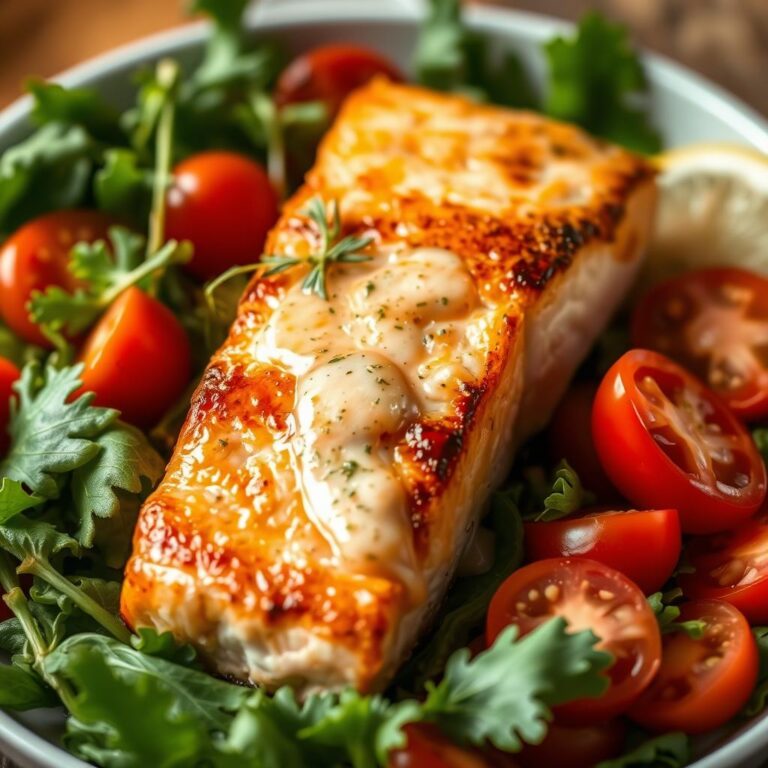

Baked Salmon Recipes: 7 Tips for Perfect Baked Salmon
Every home cook faces the challenge of cooking seafood that’s both tasty and perfectly done. Baked salmon recipes can turn a simple dinner into a gourmet meal with a few expert tips. My own salmon cooking journey started with many dry, overcooked attempts that left me disappointed and hungry.
Perfect baked salmon isn’t just about following a recipe. It’s about understanding the delicate nature of this nutritious fish. These seven tips will help you make consistently moist, flavorful baked salmon. They will boost your cooking skills and impress everyone.
Salmon is a great canvas for flavors, full of omega-3 fatty acids and high-quality protein. By mastering these essential techniques, you’ll make simple baked salmon recipes into unforgettable meals. These meals will wow your family and friends.
Key Takeaways
- Choose fresh, high-quality salmon for best results
- Temperature control is critical for perfect baking
- Proper seasoning enhances natural salmon flavors
- Use a meat thermometer to ensure perfect doneness
- Experiment with different marinades and herb combinations
The Perfect Temperature and Timing for Baked Salmon
Cooking salmon to perfection needs precision and knowing the right temperature and time. You want to make a delicious, moist, and safe fish. It should taste great and be good for you.
Mastering Oven Temperature
The best salmon baking temperature is 350°F (175°C). This keeps the fish cooking evenly without drying it out. Cooking at lower temperatures can make the salmon undercooked. Cooking at higher temperatures can make it tough and rubbery.
Cooking Time Recommendations
- Thin fillets (½ inch): 10-12 minutes
- Medium fillets (1 inch): 15-18 minutes
- Thick fillets (1½ inches): 20-25 minutes
Precision with Meat Thermometer
A meat thermometer is key for perfect salmon. Aim for an internal temperature of 145°F. This ensures the fish is safe to eat and stays moist and tender.
| Salmon Thickness | Baking Temperature | Estimated Cooking Time |
|---|---|---|
| ½ inch | 350°F | 10-12 minutes |
| 1 inch | 350°F | 15-18 minutes |
| 1½ inches | 350°F | 20-25 minutes |
Remember, cooking times can change based on your oven and the salmon’s starting temperature. Always check if it’s done and adjust as needed for the perfect baked salmon.
Essential Ingredients for Flavorful Salmon
Making a tasty salmon seasoning is key to a great fish dish. When you’re baking salmon, picking the right ingredients can make your meal amazing.
Your salmon seasoning should enhance the fish’s natural taste. It should also add depth and complexity. Here are the must-have ingredients for salmon:
- Fresh herbs like dill, parsley, and chives
- Citrus elements such as lemon zest and juice
- Garlic and shallots for aromatic intensity
- High-quality olive oil
- Sea salt and freshly ground black pepper
Professional chefs know the secret to great baked salmon is balanced seasoning. Mixing herbs, acids, and aromatics can turn your fish into a dish fit for a restaurant.
| Ingredient Category | Recommended Options | Flavor Profile |
|---|---|---|
| Fresh Herbs | Dill, Parsley, Thyme | Bright, Fresh, Earthy |
| Citrus | Lemon, Orange Zest | Tangy, Vibrant |
| Aromatics | Garlic, Shallots | Intense, Rich |
For an exceptional salmon seasoning, try different mixes. Remember, using top-quality ingredients is key to a delicious and beautiful dish.
Preparing Your Salmon Before Baking
Getting your salmon ready for baking is key. The right steps can turn a simple fish into a gourmet dish. Knowing how to prepare salmon ensures it’s always delicious and perfectly cooked.
First, let your salmon come to room temperature. Cold fish cooks unevenly, leading to overcooked or undercooked parts. Here’s what to do:
- Remove salmon from refrigerator 15-20 minutes before cooking
- Pat fish dry with paper towels to remove excess moisture
- Place on a clean cutting board or plate
Seasoning Salmon Like a Pro
Seasoning salmon is an art that can make your dish stand out. Your choice of seasoning depends on the flavor you want. Dry rubs give a crispy exterior, while marinades add deeper flavors.
Skin-On vs. Skinless Salmon Preparation
The debate on skin-on vs. skinless salmon is ongoing. Skin-on salmon keeps moisture in and gets crispy. Skinless salmon is better for seasoning and checking doneness. Your choice depends on what you like and how you cook.
- Skin-on benefits:
- Protects fish from direct heat
- Keeps moisture locked in
- Creates crispy texture when properly cooked
- Skinless advantages:
- More surface area for seasoning
- Easier to check doneness
- Preferred for certain recipes
Remember, seasoning salmon should enhance its flavor, not mask it. Use quality herbs, spices, and seasonings lightly to bring out the fish’s taste.
Baked Salmon Recipes: Classic and Contemporary
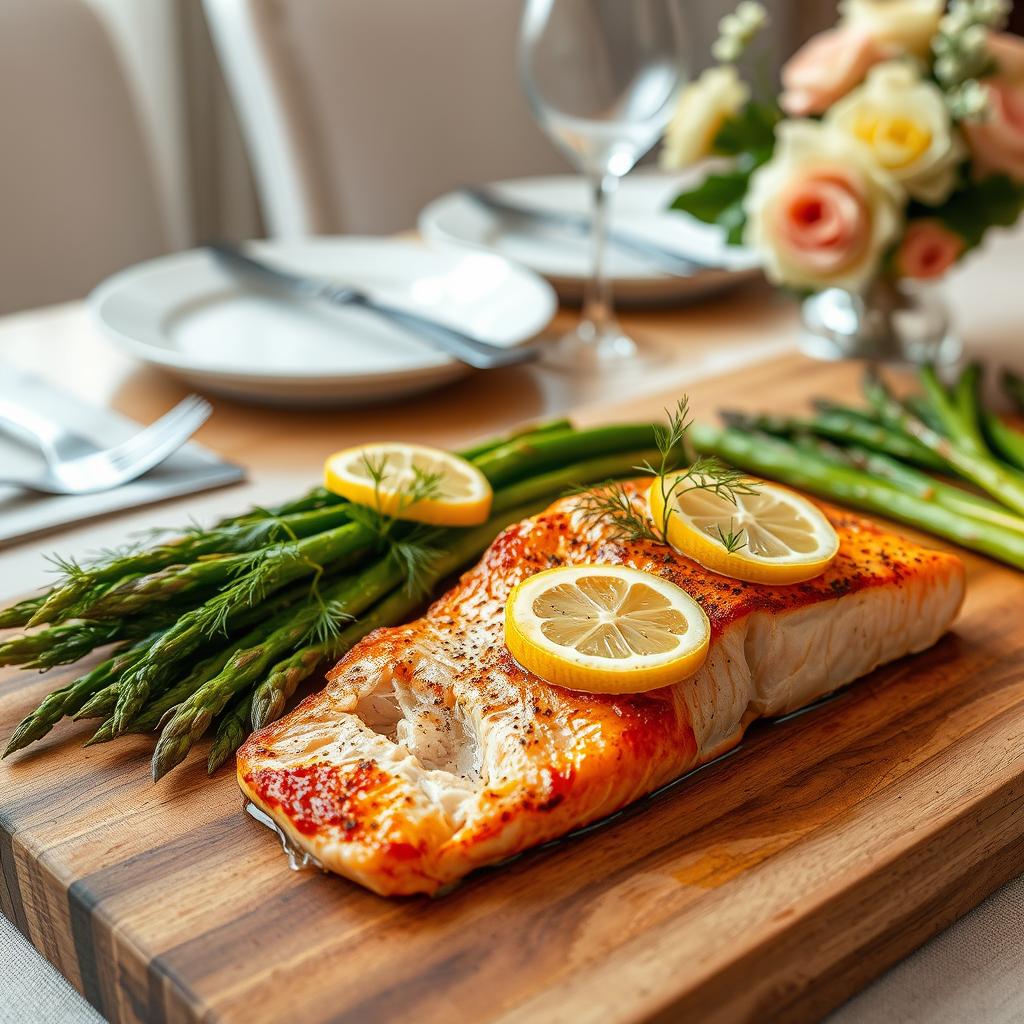
Exploring salmon recipes opens up a world of culinary possibilities. Baked salmon dishes offer versatility and flavor that can transform your dinner routine. Whether you’re a home cook or a kitchen enthusiast, mastering different baked salmon recipes will elevate your cooking skills.
Classic salmon recipes provide a solid foundation for your cooking repertoire. Start with these timeless preparations that never fail to impress:
- Lemon-Herb Butter Salmon: A traditional favorite that combines zesty citrus with fresh herbs
- Mediterranean-style salmon with olive oil and garlic
- Classic salt and pepper seasoned baked salmon
For those seeking more adventurous baked salmon dishes, contemporary recipes bring exciting flavor combinations:
- Honey-garlic glazed salmon with Asian-inspired seasonings
- Spicy Cajun-rubbed salmon with cayenne and paprika
- Maple-mustard glazed salmon for a sweet and tangy twist
Your salmon recipes can be customized to match your taste preferences. Experiment with different marinades, herbs, and cooking techniques to discover your perfect baked salmon dish. The key is balancing flavors while maintaining the fish’s delicate texture.
Lemon-Herb Butter Sauce Technique
To take your baked salmon to the next level, use a secret ingredient: lemon-herb butter sauce. This sauce can turn a simple meal into a gourmet dish.
Making the perfect lemon-herb butter is all about finding the right mix of flavors. The goal is to boost the salmon’s taste without overpowering it.
Fresh Herb Selection
Choosing the right herbs is key for a memorable sauce. Here are some top picks for your lemon-herb butter:
- Parsley: Bright and fresh
- Dill: Classic salmon companion
- Chives: Mild onion undertones
- Thyme: Earthy and subtle
Butter Sauce Proportions
Getting the lemon-herb butter just right means using the right amounts. A common recipe includes:
- 1/2 cup unsalted butter
- 2 tablespoons fresh lemon juice
- 2 minced garlic cloves
- 3 tablespoons finely chopped fresh herbs
Application Methods
There are many ways to use your lemon-herb butter sauce for maximum flavor:
- Pre-baking brush: Coat salmon before cooking
- Drizzle over finished fish
- Serve as a side dipping sauce
- Gently fold into cooked salmon
Try out these methods to find your favorite way to enjoy salmon sauce. It will make your baked salmon taste like it’s from a fancy restaurant.
Sheet Pan and Baking Equipment Guide
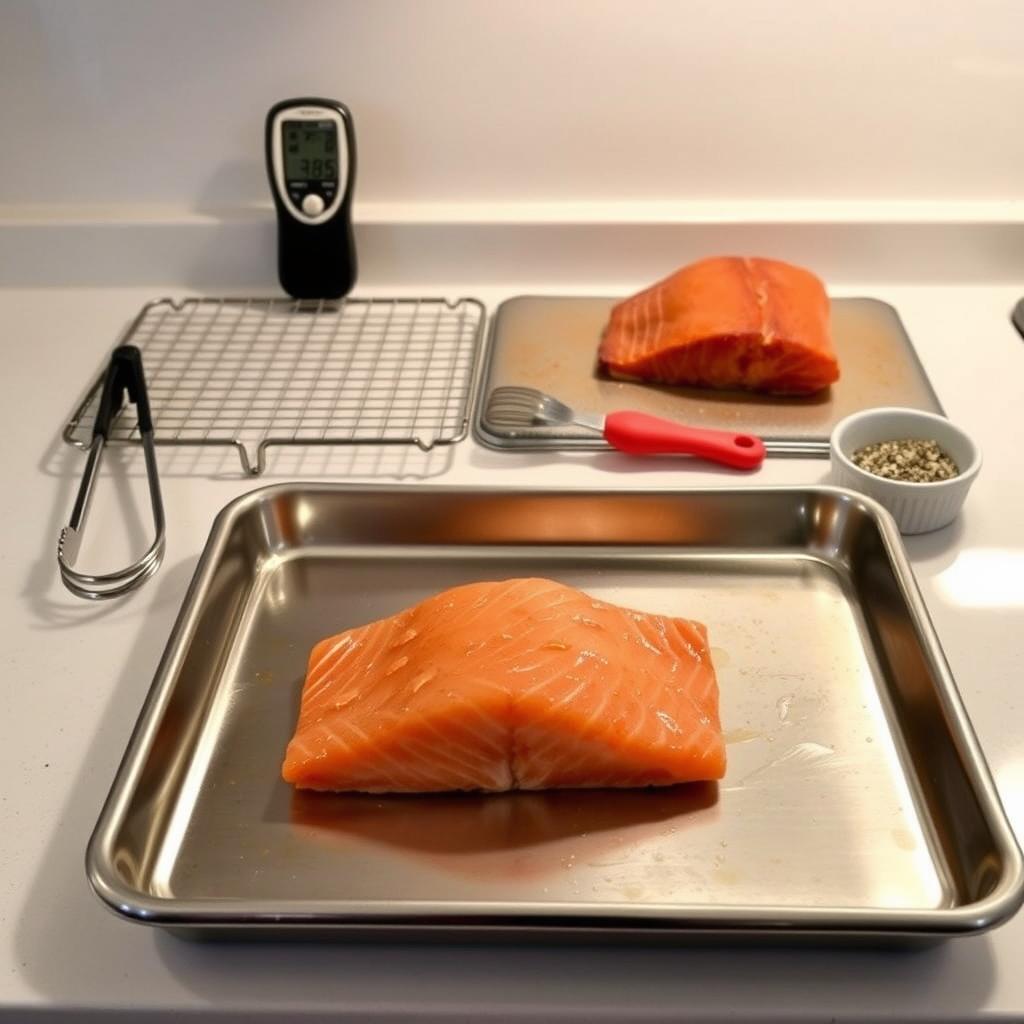
Choosing the right salmon baking equipment can make a big difference. It can turn your cooking into something special. Start by picking the best tools for easy and fun cooking.
When looking for salmon baking equipment, remember these key items:
- High-quality sheet pan with rimmed edges for catching juices
- Non-stick parchment paper or silicone baking mat
- Sturdy fish spatula for easy salmon transfer
- Instant-read meat thermometer for precise cooking
A good sheet pan setup helps with even heat and easy cleanup. Different materials like ceramic, aluminum, and stainless steel have their own perks. Ceramic keeps heat well, while aluminum cooks fast and evenly.
Pro tip: Use parchment paper or a silicone mat on your sheet pan. It prevents sticking and makes cleaning up easy. This simple trick can save you a lot of time and hassle.
Your salmon baking equipment should be both useful and easy to use. Choose tools that make cooking smoother and more fun.
Understanding Salmon Doneness
Cooking salmon to perfection is an art that needs precision and knowledge. Knowing how to tell if salmon is cooked right ensures a delicious, tender meal every time. Salmon doneness is key for both flavor and safety.
Professional chefs know that checking salmon doneness is more than just guessing. Your goal is to get a moist, flaky texture that’s safe and delicious.
Visual Indicators of Cooked Salmon
When checking salmon doneness, look for these key visual cues:
- Color transformation from translucent to opaque pink
- White protein droplets on the surface
- Uniform light pink color throughout the fish
Texture Testing Techniques
Mastering texture testing helps you understand how to tell if salmon is cooked perfectly:
- Gently press the salmon with a fork
- Check if the fish flakes easily
- Ensure the texture is tender but not mushy
The ideal internal temperature for salmon doneness is 145°F. Using a meat thermometer is the most accurate way to confirm your fish is perfectly cooked and safe to eat.
Storage and Leftover Management
Storing cooked salmon right is key to keeping its taste and ensuring safety. You need to follow certain steps to keep your fish fresh and tasty.
Your freshly baked salmon can stay in the fridge for 3-4 days in an airtight container. Cool the fish down completely before putting it in the fridge. This stops moisture and bacteria from growing.
- Use shallow, airtight containers for storing cooked salmon
- Refrigerate within two hours of cooking
- Keep salmon at or below 40°F (4°C)
When reheating salmon, warm it gently. Avoid microwaving as it can dry out the fish. Try these methods instead:
- Oven method: Preheat to 275°F and warm for 10-15 minutes
- Skillet method: Use low heat with a splash of water
- Steam gently to retain moisture
There are many ways to use salmon leftovers. You can add them to salads, make salmon cakes, or mix them into pasta. By following these tips, your baked salmon will stay delicious and safe to eat.
Pairing and Serving Suggestions
To make your baked salmon special, choose the right side dishes and wines. The perfect pairings can turn your meal into a memorable experience. It will delight your senses and leave a lasting impression.
Perfect Vegetable Side Dishes for Salmon
Choose vegetables that match the salmon’s rich taste. Roasted veggies offer a nice contrast to the fish’s softness.
- Roasted asparagus with garlic
- Honey-glazed brussels sprouts
- Grilled zucchini with herbs
- Caramelized root vegetables
Grain Accompaniments that Shine
Grains add a solid base to your salmon dish. Here are some great options:
- Herbed quinoa
- Wild rice pilaf
- Lemon-infused couscous
- Creamy risotto
Wine with Salmon: Perfect Pairings
Finding the right wine can make your salmon meal unforgettable. Here’s a quick guide:
| Salmon Preparation | Recommended Wine |
|---|---|
| Herb-Baked Salmon | Sauvignon Blanc |
| Teriyaki Salmon | Pinot Noir |
| Lemon Butter Salmon | Chardonnay |
Remember, what you like is most important. Try different sides and wines to find your favorite.
Conclusion
Making perfect baked salmon is more than just a recipe. You’ve learned key tips to turn a simple dish into a masterpiece. Knowing about temperature, ingredients, and prep techniques is essential for top-notch results at home.
Starting your salmon journey means practicing and gaining confidence. Every time you cook, you’ll get better and find new flavors. Whether you stick to classic recipes or try new marinades, the basics stay the same.
Great salmon dishes are all about balance. Focus on the right cooking temperature, pick fresh ingredients, and be open to trying new things. The best recipes come from knowing the basics and adding your own twist. With patience and the right tips, you’ll impress everyone with your baked salmon.
Your cooking journey is just beginning. Keep trying new techniques, herbs, and seasonings to make each dish special. The more you cook, the more natural it will become. Soon, you’ll be a skilled home chef, whipping up perfect baked salmon with ease.