How to Cook the Perfect Beef Steak: Tips and Recipes for Tender Meat
Every home cook dreams of serving a perfect beef steak that’s tender and delicious. It’s not just luck; it’s an art that requires skill and passion. Whether you’re a weekend griller or an aspiring chef, learning steak cooking tips can make any meal special.
Cooking the perfect steak is easier than you think. With the right knowledge and practice, you can make a steak that will wow your family and friends. This guide will teach you how to choose the best cut and use cooking techniques to make a delicious beef steak.
Key Takeaways
- Learn essential techniques for selecting high-quality beef cuts
- Understand the importance of proper meat preparation
- Master temperature control for perfect doneness
- Discover seasoning secrets for maximum flavor
- Develop confidence in pan-searing and cooking methods
Understanding Different Cuts of Steak
Choosing the right steak is key to a great meal. Not all steaks are the same. Knowing the differences can make your cooking better. Each steak has its own taste and texture, making dinner special.
Top sirloin and ribeye are two top picks. They each have special qualities that meat lovers enjoy.
Top Sirloin Characteristics
Top sirloin is lean and full of flavor. It’s from the upper sirloin, blending tenderness with rich beef taste. It’s perfect for pan-searing, giving a great eating experience.
Ribeye Excellence
Ribeye is the top for flavor and marbling. It’s from the rib area, known for its rich taste. The fat inside makes it juicy and tender, a true delight.
Thickness and Marbling Requirements
For pan-searing, focus on these:
- Ideal thickness: 1-1.5 inches
- Marbling: Look for consistent white fat streaks throughout the meat
- Boneless cuts preferred for stovetop cooking
| Steak Cut | Marbling Level | Best Cooking Method |
|---|---|---|
| Top Sirloin | Moderate | Pan-searing, grilling |
| Ribeye | High | Pan-searing, direct heat |
Choosing Quality Meat for Pan-Searing
Your steak choice affects your dish. Look for meat with good marbling, even thickness, and a fresh look. Remember, the quality of your meat determines the success of your cooking.
Essential Equipment and Tools for Steak Cooking
Getting the perfect steak is more than just good meat. Your cooking gear is key to making it taste like a restaurant at home. The right tools turn a simple meal into a feast.
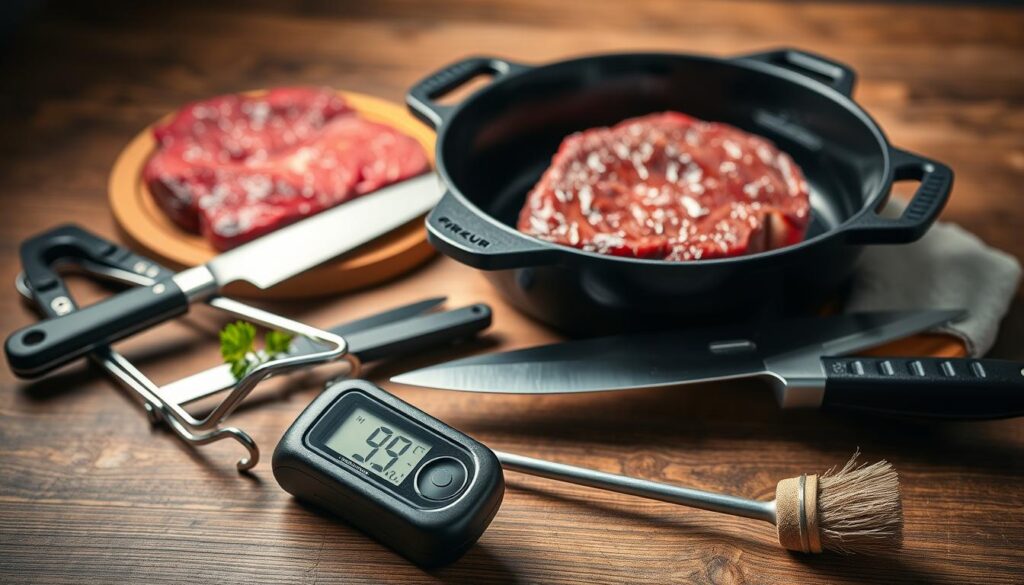
Here are the must-haves for your steak cooking equipment:
- Cast iron skillet for superior heat retention
- Reliable meat thermometer for precise doneness
- Long-handled tongs for safe meat handling
- Sharp kitchen knife for trimming
- Sturdy cutting board
A cast iron skillet is the best for steaks. It keeps heat well, giving a great sear and a tasty crust. Over time, it gets better at not sticking.
Your meat thermometer is key for the perfect steak. Digital thermometers give quick, accurate readings. They help you cook your steak just right.
| Equipment | Purpose | Recommended Type |
|---|---|---|
| Cast Iron Skillet | High-heat searing | Pre-seasoned 12-inch skillet |
| Meat Thermometer | Temperature monitoring | Digital instant-read probe |
| Tongs | Meat manipulation | Stainless steel with silicone tips |
Invest in top-notch steak cooking gear to improve your cooking at home. Each tool is important for a steak that’s as good as a restaurant’s.
The Art of Steak Seasoning and Preparation
Preparing the perfect steak starts long before it hits the pan. Learning how to season and prepare the surface can turn an ordinary cut into a special meal. The right methods will make your cooking better and give you a delicious, restaurant-quality steak.
Proper Salting Techniques
Salt is key to great steak seasoning. Chefs say use kosher salt for its clean taste and big crystals. How you salt can change the meat’s taste and feel.
- Use coarse kosher salt for best results
- Apply salt generously but not excessively
- Salt the steak 30 minutes before cooking
Optimal Seasoning Timing
Timing is everything in steak prep. The 30-minute rule lets salt soak into the meat and pull out moisture. This helps make a perfect crust when cooking.
| Timing Method | Result |
|---|---|
| Salting 30 minutes prior | Ideal moisture removal and flavor absorption |
| Salting immediately before cooking | Less moisture control, possible wet surface |
| Salting hours in advance | Risk of over-salting and texture changes |
Dry Surface Preparation
A dry surface is key for a golden-brown crust. Pat your steak dry with paper towels before seasoning. This step removes extra moisture, helping you get a perfect sear and avoiding steaming.
- Use clean paper towels
- Thoroughly pat the entire surface
- Remove any visible moisture
By mastering these steak seasoning techniques, you can turn your home-cooked steak into a culinary masterpiece.
How to Cook the Perfect Beef Steak
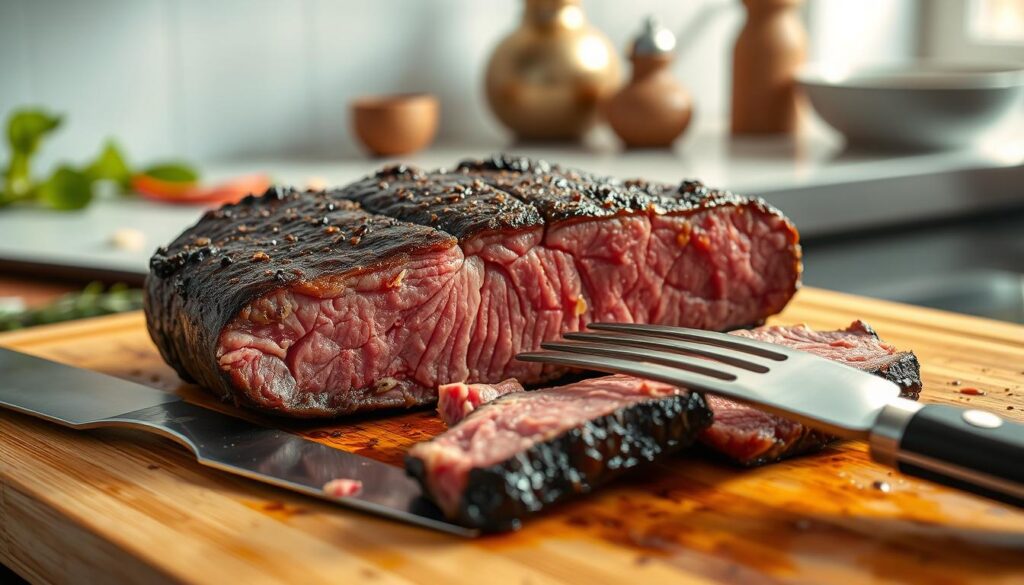
Cooking the perfect steak is an art that needs skill, technique, and meat knowledge. It’s about paying attention to details and practicing. Whether you cook at home or dream of being a chef, learning to make a tasty steak will boost your cooking skills.
The secret to a perfect steak involves three main steps:
- Choosing the right meat and preparing it
- Using the right cooking method
- Letting the steak rest properly
Several factors affect how well your steak is cooked:
- The quality of the meat cut
- The initial temperature of the meat
- The heat of the cooking surface
- How long you cook it
Different ways to cook steak can change its taste and texture. Pan-searing, grilling, and oven-finishing each have their own benefits for getting the perfect steak.
| Cooking Method | Pros | Best For |
|---|---|---|
| Pan-Searing | Creates crispy exterior | Ribeye, New York Strip |
| Grilling | Smoky flavor | Sirloin, Flank Steak |
| Oven Finishing | Even cooking | Thick cuts |
Remember, the more you practice, the better you’ll get at cooking steak. Every try helps you improve your technique and learn about heat, timing, and meat preparation.
Mastering the Pan-Searing Technique
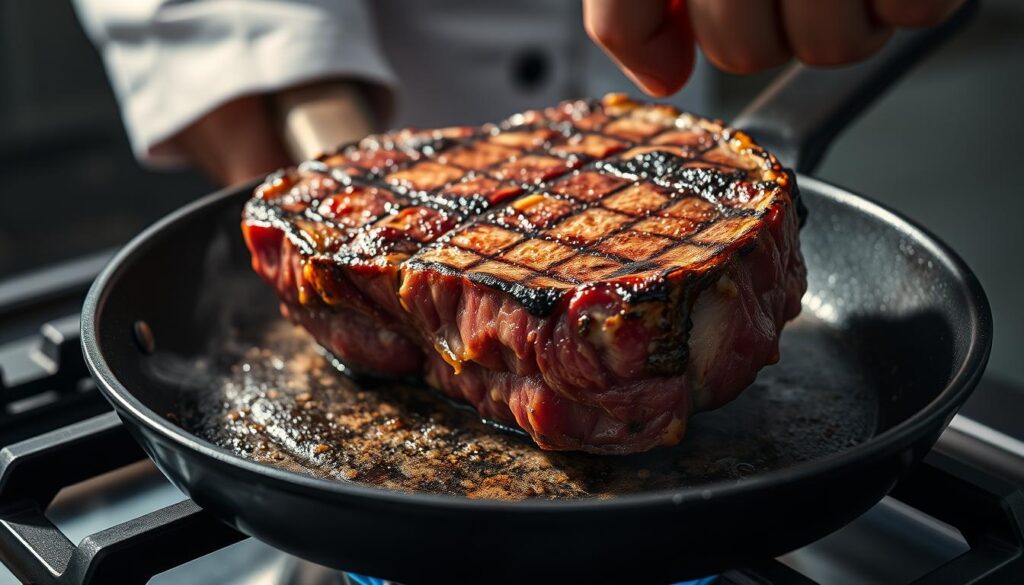
Pan-searing steak is an art that turns an ordinary cut into a top-notch dish. It’s all about mastering high heat cooking and precise technique. With the right steps, you can achieve a crispy outside and a juicy inside.
- Cast-iron skillet
- Tongs
- Instant-read meat thermometer
- High smoke point oil
- Butter
- Fresh herbs (optional)
High Heat Cooking Method
The secret to perfect pan-searing is extreme heat. Use a heavy-bottomed skillet, like cast iron, and heat it until it’s smoking. Your pan should be so hot that water instantly sizzles and evaporates.
Butter Basting Process
Butter basting makes your steak truly exceptional. Halfway through cooking, add butter to the pan. Tilt the skillet and spoon the hot, buttery sauce over the steak. This method creates a rich crust and keeps the meat moist.
Flipping and Timing Tips
Flipping your steak often is key. Turn it every 30-45 seconds for even cooking and a uniform crust. The cooking time varies based on the steak’s thickness and your desired doneness.
| Steak Thickness | Cooking Time | Approximate Flips |
|---|---|---|
| 1/2 inch | 2-3 minutes | 4-6 flips |
| 1 inch | 4-5 minutes | 6-8 flips |
| 1.5 inches | 6-7 minutes | 8-10 flips |
Remember, practice makes perfect. Each time you pan-sear a steak, you’ll get better and more confident in this delicious technique.
Temperature Guidelines for Different Levels of Doneness
To get the perfect steak, you need precision and a good meat thermometer. Knowing the internal temperature is key to cooking your steak just right. Each doneness level has a temperature range that changes the meat’s texture and taste.
A meat thermometer is your best friend for perfect steak doneness. Put the thermometer in the thickest part of the steak for the most accurate reading.
- Rare Steak: Remove from heat at 125°F
- Cooking time: Approximately 6 minutes
- Bright red center, very soft texture
- Medium-Rare Steak: Remove from heat at 130°F
- Cooking time: Approximately 8 minutes
- Warm red center, slightly firmer texture
- Medium Steak: Remove from heat at 140°F
- Cooking time: 9-10 minutes
- Pink center, more substantial texture
- Well-Done Steak: Remove from heat at 160°F
- Cooking time: About 12 minutes
- Little to no pink, firm throughout
Remember, the steak will continue to cook a bit after you take it off the heat. This is called carryover cooking and raises the temperature by about 5 degrees. Always let your steak rest for 5-10 minutes before cutting. This lets the juices spread evenly.
| Doneness Level | Internal Temperature | Approximate Cooking Time | Appearance |
|---|---|---|---|
| Rare | 125°F | 6 minutes | Bright red center |
| Medium-Rare | 130°F | 8 minutes | Warm red center |
| Medium | 140°F | 9-10 minutes | Pink center |
| Well-Done | 160°F | 12 minutes | No pink |
Creating Flavorful Marinades and Sauces
Improving your steak’s taste is more than just seasoning. Marinades and pan sauces can turn a simple steak into a gourmet dish. These methods add depth and complexity to your meat, both before and after cooking.
Classic Steak Marinade Secrets
Making the perfect steak marinade is all about the right mix. Your marinade should have:
- An acidic part (vinegar or citrus juice)
- Oil for keeping it moist
- Herbs and spices for flavor
- A bit of sweetness to balance it out
A classic mix includes soy sauce, olive oil, balsamic vinegar, Dijon mustard, and a bit of maple syrup. This blend tenderizes the meat and adds rich flavors. Tip: Marinate in a non-reactive container in the fridge for 2-24 hours, based on the meat’s thickness.
Mastering Pan Sauce Preparation
After cooking your steak, turn the browned bits into a tasty pan sauce. Use wine, broth, or whiskey to deglaze the pan. Then, add butter and reduce it until it’s just right.
Great pan sauces come from layering flavors. Try herbs like thyme or rosemary, and add cream for extra richness. Your taste buds will love the extra effort in making these flavorful sauces.
Common Steak Cooking Mistakes to Avoid
Cooking the perfect steak needs skill and focus. Many home cooks make mistakes that can spoil a great steak. Knowing these errors can improve your cooking and make delicious steaks every time.
Seasoning mistakes are common. People often under-season or season too late. Season well and let the meat rest for about 40 minutes before cooking.
- Overcooking: The number one steak cooking mistake that destroys meat’s flavor and texture
- Using cold meat directly from the refrigerator
- Incorrect pan temperature
- Improper resting techniques
Temperature control is key when cooking steak. Overcooking makes meat tough and dry. Chefs use meat thermometers for exact doneness. Each level of doneness has a specific temperature.
| Doneness Level | Internal Temperature | Cooking Time |
|---|---|---|
| Rare | 125°F | 2-3 minutes per side |
| Medium Rare | 135°F | 3-4 minutes per side |
| Medium | 145°F | 4-5 minutes per side |
Another mistake is not preparing the cooking surface right. Make sure your pan is hot and use a heavy skillet. Don’t overcrowd the pan to avoid steaming instead of searing.
By avoiding these common mistakes, you can cook steaks like a pro in your kitchen.
Conclusion
Cooking the perfect steak is an art that anyone can learn. It takes dedication and practice. Your journey starts by picking the right cuts, seasoning them well, and mastering cooking temperatures.
Each step you take brings you closer to making steaks like a pro in your kitchen. This is how you create restaurant-quality steaks at home.
The key to getting better at cooking is to experiment. Try different cuts, unique marinades, and cooking methods. Your steak skills will grow as you learn to read meat textures and control heat.
Remember, every great chef began as a beginner. Your skills will get better with each steak you make. Soon, what seemed hard will become fun.
Invite friends and family to try your steaks. You’ll get praise for your cooking. This will make you feel proud of your skills.
Steak cooking is about passion, patience, and learning. Trust your instincts and focus on the details. Enjoy the tasty results of your hard work.
Your journey to becoming a steak expert starts now. Keep practicing and you’ll get better and better.