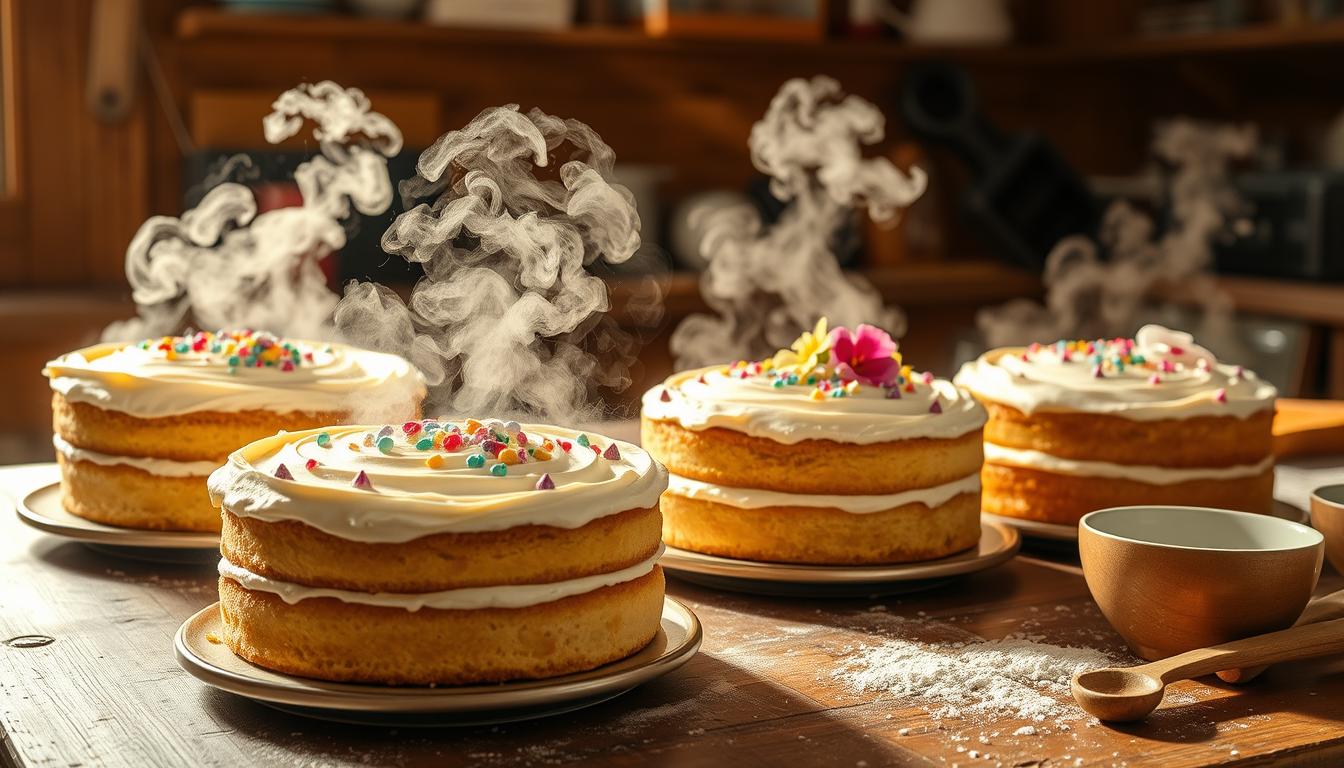
How to Bake Perfect Cakes: Simple Tips and Tricks for Home Bakers
Every kitchen has a story. Mine started with a lopsided chocolate cake. It taught me baking perfect cakes is more art than science.
The first time my cake looked less than perfect, I learned a lot. Mastering cake baking tips takes patience and practice.
Baking perfect cakes isn’t about being a pro. It’s about knowing the basic techniques. These techniques turn simple ingredients into delicious treats. Whether you’re new to baking or want to get better, this guide will help you make stunning cakes at home.
With the right knowledge, anyone can make amazing desserts. Cake baking tips are skills you can learn. All it takes is dedication and the right approach.
Key Takeaways
- Baking perfect cakes is achievable for home bakers
- Understanding fundamental techniques is key
- Practice and patience lead to improvement
- Quality ingredients matter more than complicated techniques
- Every baking attempt is a learning opportunity
Essential Ingredients and Equipment for Perfect Cake Baking
Successful cake baking starts with the right tools and ingredients. It’s not just about following a recipe. It’s about precision, quality tools, and fresh ingredients working together.
Professional bakers know the right tools are key. Your kitchen should have the best equipment for consistent, high-quality results.
Quality Bakeware Selection
When choosing bakeware, consider these key factors:
- Material durability and heat distribution
- Non-stick surfaces
- Pan size and shape compatibility
Must-Have Measuring Tools
Accurate measurements are key in cake baking. Invest in these essential tools:
| Tool | Purpose | Recommended Type |
|---|---|---|
| Digital Scale | Precise weight measurements | Electronic kitchen scale |
| Measuring Cups | Volume measurements | Stainless steel or glass set |
| Measuring Spoons | Small ingredient quantities | Nested metal set |
Fresh Ingredient Checklist
Your ingredient quality affects cake flavor and texture. Always prioritize freshness with these key items:
- Eggs: Use room temperature, fresh eggs
- Flour: Store in airtight container
- Butter: Choose high-quality, unsalted varieties
- Leavening agents: Check expiration dates
By choosing the right equipment and ingredients, you’ll bake success into every cake.
Understanding Room Temperature Ingredients
Getting your cake ingredients ready right is key. Temperature plays a big role in baking. Cold ingredients can mess up your cake’s texture and make it not rise right.
Ingredients at room temperature mix better and make cakes light and fluffy. They should be around 68-70°F (20-21°C) for best results.
- Butter should be soft but not melted
- Eggs work best when they’re not straight from the refrigerator
- Milk and cream should sit out for 15-30 minutes before mixing
Here are quick tips to get ingredients ready:
- Remove butter from refrigerator 30-60 minutes before baking
- Place eggs in warm water for 5-10 minutes
- Microwave milk in short 10-second bursts if needed
Pro tip: Never use hot ingredients, as they can cook eggs or melt butter prematurely, ruining your cake’s structure.
The secret to professional-quality cakes lies in precise ingredient preparation.
Proper Measuring Techniques for Consistent Results
Precision is key to making great cakes. Measuring ingredients right is a skill that’s essential. It can make your baking a success.
https://www.youtube.com/watch?v=9f-fxoWUtig
Learning to measure ingredients well is important. Each type of ingredient needs a special way to measure. This ensures your cake turns out right every time.
Dry Ingredient Measuring Methods
Here’s how to measure dry ingredients like flour:
- Use clean, dry measuring cups made for dry ingredients
- Spoon ingredients into the cup without pressing down
- Level off the top with a knife
- Don’t tap or shake the cup, as it can pack ingredients
Liquid Ingredient Precision
Measuring liquids is different. Use clear cups with lines at eye level. Place the cup flat and check the measurement at the bottom.
Weight vs. Volume Measurements
Professional bakers prefer using a digital kitchen scale. It gives more consistent results than measuring by volume.
A digital scale eliminates the variability of cup and spoon measurements, ensuring perfect results every time.
By using these measuring techniques, your cake baking will improve. Precision is what makes cakes delicious and impressive.
How to Bake Perfect Cakes: Expert Techniques
Mastering cake baking takes precision and practice. Professional bakers turn simple cakes into amazing desserts. To become skilled, learn the expert methods that make a big difference.
Great cake baking is all about the details. Experts focus on a few key areas to improve your baking:
- Consistent ingredient temperature
- Precise mixing methods
- Strategic ingredient incorporation
- Careful oven management
Now, let’s look at some expert baking methods used by top pastry chefs:
| Technique | Purpose | Professional Tip |
|---|---|---|
| Sifting Dry Ingredients | Eliminate lumps | Use a fine-mesh strainer for smooth texture |
| Room Temperature Ingredients | Ensure even mixing | Remove ingredients 30-60 minutes before baking |
| Gentle Folding | Maintain batter structure | Use a spatula with light, sweeping motions |
Professional bakers say cake baking is all about precision and patience. Every step, from picking ingredients to mixing, is important. By using these expert methods, you’ll make cakes that look and taste like they were made by a pro.
“Baking is a science, and mastering its techniques is the key to culinary excellence.” – Professional Pastry Chef
Mastering the Creaming Method
The creaming method turns simple ingredients into a light, fluffy cake. Learning to cream butter and sugar well can elevate your cake from ordinary to extraordinary.
Creaming butter and sugar is more than mixing. It’s a precise process that adds air to your batter. This makes your cake delicate and tender.
The Science Behind Creaming
Creaming butter and sugar does more than just mix ingredients. It creates tiny air pockets. These pockets help your cake rise evenly and become soft.
- Use room temperature butter for best results
- Beat butter and sugar until light and fluffy
- Aim for a pale, creamy consistency
Butter and Sugar Incorporation Technique
Begin with softened butter and granulated sugar. Beat them until the mix is pale and voluminous. This usually takes 3-5 minutes with an electric mixer.
| Butter Temperature | Creaming Result |
|---|---|
| Too Cold | Dense, uneven mixture |
| Room Temperature | Light, fluffy texture |
| Too Warm | Greasy, collapsed mixture |
Adding Eggs and Flavorings
Add eggs one at a time, mixing well after each. This keeps the batter from separating and preserves the air from the creaming method.
Final Mixing Tips
When adding dry ingredients, mix on low speed. This prevents deflating the batter. Stop mixing as soon as ingredients are combined to keep your cake light and tender.
Preventing Common Cake Baking Mistakes

Mastering cake baking means knowing how to avoid common mistakes. These mistakes can turn a great dessert into a bad one. It’s important to know the most common errors that home bakers face.
Some of the biggest mistakes come from small oversights. Overmixing your batter can make cakes tough and dense. This happens because too much gluten is developed, making the cake heavy and not fluffy.
- Avoid overmixing by stopping when ingredients are just combined
- Use a gentle folding technique for delicate batters
- Mix at low speed to prevent excessive gluten development
Temperature is also key in baking a good cake. If the oven temperature is off, your cake might not bake right. This can cause it to be undercooked in the middle or burnt on the edges.
| Cake Baking Mistake | Potential Consequence | Prevention Strategy |
|---|---|---|
| Incorrect Oven Temperature | Uneven baking | Use an oven thermometer for accuracy |
| Poor Pan Preparation | Cake sticking | Grease and flour pans thoroughly |
| Room Temperature Ingredients | Uneven mixing | Allow ingredients to warm before mixing |
Getting your pan ready is also important. Make sure it’s well-greased and lined. This helps prevent sticking and ensures even baking. Taking the time to do this can make a big difference in your cake’s quality.
Achieving the Perfect Cake Texture
Making a delicious cake with the right texture needs careful attention. Bakers must follow cake texture tips to make their treats stand out. Knowing how to mix, keep consistency, and control temperature is key to moist cakes every time.
Getting the cake texture right involves several important steps. It’s not just about following a recipe. It’s about understanding the science behind baking.
Proper Mixing Duration
Mixing your cake batter needs a gentle touch. Overmixing can make cakes tough and dense. Here are some tips for mixing:
- Mix dry ingredients separately before combining with wet ingredients
- Stop mixing as soon as ingredients are just incorporated
- Watch for no visible flour streaks, but avoid excessive beating
Batter Consistency Guide
Getting the batter consistency right is key to moist cakes. The batter should be smooth and silky, dropping easily from a spatula.
- Look for a thick but pourable consistency
- Ensure no lumps remain in the batter
- Test batter smoothness by lifting and dropping the spatula
Temperature Control Tips
Oven temperature is very important for cake texture. Use an oven thermometer for accurate heat. Different pans and materials might need slight baking time changes.
Moist cakes need precise temperature control and careful watching. A few degrees can change a cake from tender to dry and crumbly.
Testing for Doneness and Cooling Techniques
Learning how to check if a cake is done is key to baking great cakes. Knowing when your cake is fully baked can make a big difference. It can turn a dry, tough cake into a moist, tasty treat.
Professional bakers use several ways to check if a cake is done. The top methods include:
- Toothpick Test: Insert a clean toothpick into the cake’s center
- Spring-Back Method: Gently press the cake’s surface
- Visual Inspection: Check for golden-brown edges
The toothpick test is the simplest way to check if a cake is ready. When you put a toothpick into the cake’s center, it should come out clean or with a few moist crumbs. If it’s wet, the cake needs more baking time.
Cooling cakes right is also very important. It helps keep the texture good and prevents problems. Here are the best ways to cool cakes:
- Let the cake rest in the pan for 10-15 minutes after baking
- Use a wire rack to finish cooling
- Avoid cutting or frosting until the cake is room temperature
Professional bakers say cooling cakes slowly is very important. Being patient is key when cooling cakes properly.
“A perfectly baked cake is a delicate balance of technique and timing.” – Professional Baker’s Wisdom
Solutions for Flat and Even Cake Layers
Getting perfectly flat cake layers can be tough for home bakers. Uneven layers can mess up your dessert’s look and feel. But, there are ways to make your cakes even and beautiful, impressing everyone.

Professional bakers use many strategies for even cakes. These methods help your cakes rise evenly and stay the same height while baking.
Using Cake Strips for Perfect Results
Cake strips are a big help for flat cakes. They keep the temperature even and stop the edges from getting too hot. Here’s how to use them right:
- Soak cake strips in water before wrapping around the pan
- Secure strips tightly around cake pan circumference
- Ensure strips cover entire pan height
Optimal Pan Preparation Methods
How you prepare your pan is key for even cakes. Your method can greatly affect your cake’s flatness and evenness.
| Preparation Method | Effectiveness for Flat Layers |
|---|---|
| Greasing and Flouring | Good for most standard cakes |
| Parchment Paper Lining | Excellent for preventing sticking and ensuring even release |
| Silicone Baking Mats | Provides consistent heat distribution |
Temperature Considerations
Oven temperature is very important for flat cakes. Preheating your oven and using an accurate oven thermometer can make a big difference. Put your cake pan in the oven’s center for even heat.
By using these methods, you’ll make cakes that look like they were made by pros. They’ll surely impress your family and friends.
Storage and Freshness Tips
Keeping cakes fresh is all about the right storage. After baking, it’s key to store them properly. This helps keep their taste and texture just right. Each type of cake needs its own storage method to stay fresh.
For unfrosted cakes, here’s what to do:
- Cool completely before storing
- Wrap tightly in plastic wrap
- Store at room temperature for 2-3 days
- Use airtight containers for maximum freshness
Frosted cakes need extra care. Buttercream and fondant-covered cakes can stay at room temperature for 3-4 days. Cream cheese or custard-based frostings need to be refrigerated. Always cover the cake loosely in the fridge to avoid moisture.
Freezing is a great way to keep cakes fresh for longer. Unfrosted layers can be frozen for up to three months. Wrap them in plastic and foil. For frosted cakes, freeze them unwrapped first, then wrap after the frosting hardens to prevent sticking.
Pro tip: Always bring refrigerated or frozen cakes to room temperature before serving. This helps restore their best texture and flavor.
Using the right storage methods can make your cake last longer. It keeps the cake tasting great and feeling soft and moist.
Advanced Troubleshooting Guide
Cake troubleshooting can turn your baking from frustrating to fantastic. Every baker faces challenges, but knowing how to fix them makes a big difference. It helps in creating delicious desserts.
If your cake doesn’t turn out right, don’t worry. Understanding common baking issues makes you a more confident baker. Let’s look at some advanced techniques for fixing cake problems. These can save your sweet creations.
Common Cake Baking Challenges
- Sunken Centers: Often caused by underbaking or opening the oven too early
- Tough Texture: Usually results from overmixing batter
- Uneven Rising: Can be due to incorrect oven temperature or uneven pan placement
- Excessive Crumbling: Typically happens with dry ingredients or overbaking
Professional bakers know that cake troubleshooting needs patience and understanding. Each baking problem has a specific solution. This can help you save your dessert.
Quick Fixing Strategies
- Check ingredient temperatures before mixing
- Use precise measuring techniques
- Rotate pans midway through baking
- Test doneness with a toothpick
When fixing cake problems, remember that practice makes perfect. Each baking experience teaches you valuable skills. These skills improve your technique.
Baking is an art of precision and passion!
With these advanced troubleshooting techniques, you’ll be ready for any cake baking challenge.
Conclusion
Mastering cake baking is a rewarding skill that mixes science and creativity. Your confidence grows with each recipe you try. You learn from every experience and understand the details of ingredients and techniques.
The key to perfect cake baking isn’t just following recipes. It’s about knowing how ingredients work together. You’ll see that measuring carefully, knowing ingredient temperatures, and mixing well are key. These steps help you make cakes that wow family and friends.
Becoming a great home baker takes time and patience. Every cake you bake brings you closer to being a pro. Embrace the learning, try new techniques, and don’t worry about mistakes. Your confidence will grow as you use the professional methods you’ve learned.
Your baking journey is special, and with hard work, you’ll become a skilled cake maker. You’ll be able to make delicious, beautiful cakes like the ones from top bakeries. Keep exploring, keep baking, and enjoy every tasty moment of your journey.